


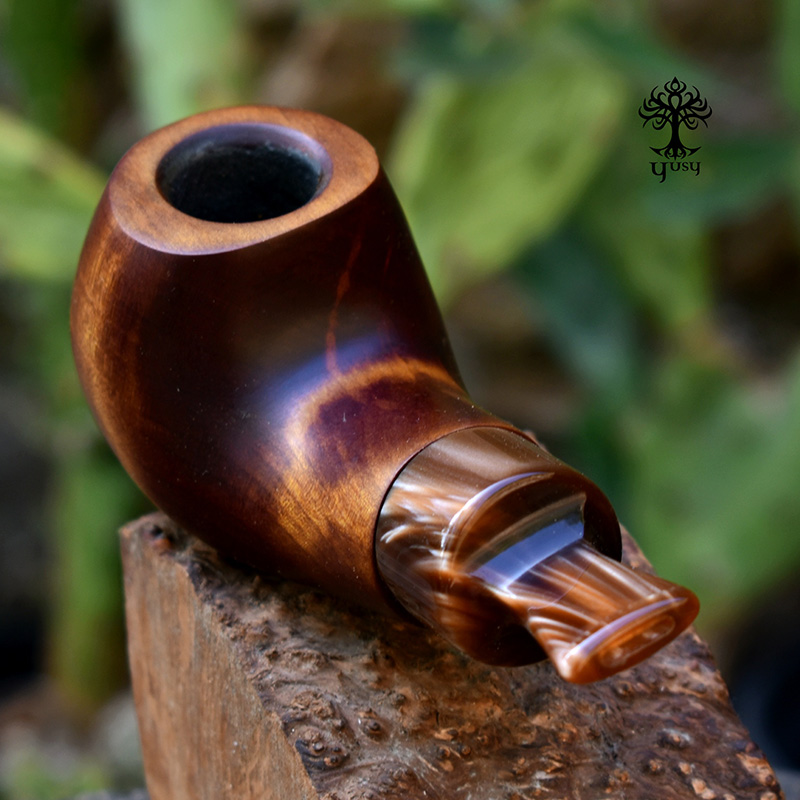
The Nose Warmer: The Little Pipe That Was Born to Work
History, origins, curiosities and the evolution of one of the most distinctive shapes in pipe smoking
Some pipes are admired for their size. Others for the length of their stems, the elegance of their curves, or the complexity of their construction. And then there are Nose Warmers.
Today, Nose Warmers are appreciated by smokers, collectors and pipe makers for their character, balance and portability. But their origins are much closer to the world of work and practicality than to luxury. And that is precisely where much of their charm comes from.
What exactly is a Nose Warmer?
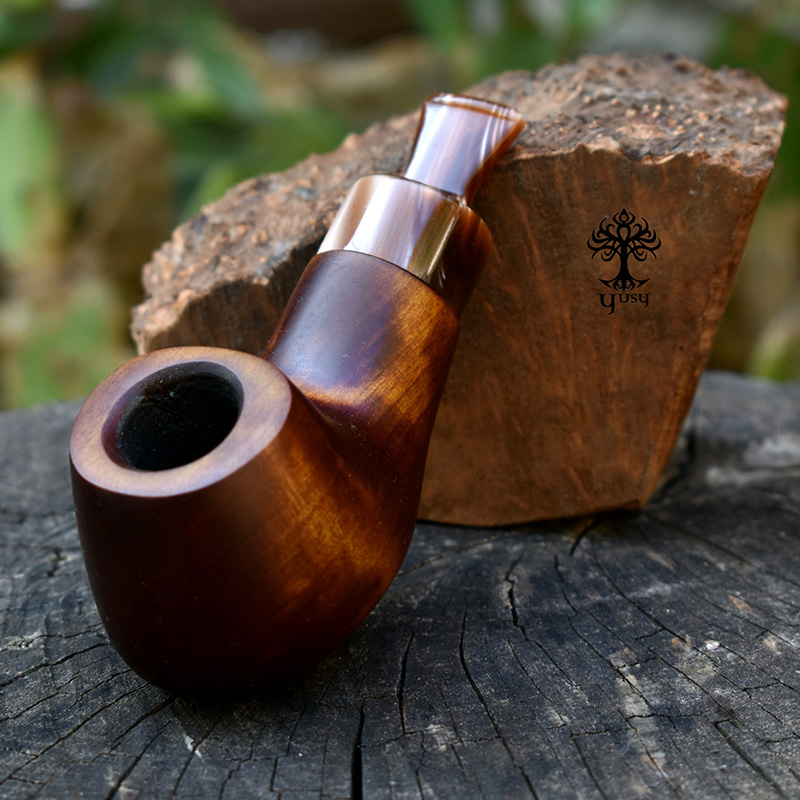 The English expression Nose Warmer literally means just that: something that warms the nose. In the world of pipe smoking, the term traditionally refers to a pipe with an extremely short stem, bringing the bowl unusually close to the smoker’s face.
There is, however, no universally accepted measurement that determines when a pipe officially becomes a Nose Warmer. Unlike shapes such as the Billiard, Bulldog or Dublin, Nose Warmer is not really a precise shape classification. It is better understood as a description of a pipe’s proportions and especially its short stem.
A Nose Warmer can therefore take many different forms. It may be straight or bent, compact or rounded, and can resemble a Billiard, Apple, Dublin, Poker, Bulldog or even a freehand. The essential characteristic is its compactness.
Modern makers continue to use the term in this broader sense. For example, Danish pipe maker Nørding has a dedicated Nose Warmer series featuring several traditional shapes.
Long before briar: the clay pipe
To understand the history of the Nose Warmer, we need to go back several centuries, to the age of the clay tobacco pipe. After tobacco reached Europe, clay pipes became one of the most widespread ways of smoking.
Britain developed a particularly important pipe-making industry. Clay pipes were inexpensive, relatively light and could be produced in large quantities, making them accessible to ordinary people.
During the seventeenth and eighteenth centuries, pipe stems became progressively longer. Some pipes developed extremely long stems, culminating in forms such as the famous Churchwarden, whose long stem placed considerable distance between the smoker’s face and the hot smoke.
But long stems were not always practical. For someone working with their hands, they could be awkward. A short pipe offered a very simple solution: it could be held between the teeth. And suddenly both hands were free.
The worker’s pipe
Imagine a craftsman, labourer or factory worker in Britain during the eighteenth or nineteenth century. He is working with both hands. He wants to smoke. A long-stemmed pipe is inconvenient. A short-stemmed pipe is not.
A compact pipe could be held between the teeth while the smoker continued working. Archaeological and historical research shows that short clay pipes known as Cuttys became particularly associated with working people because of precisely this practical advantage.
In Scotland, the term Cutty was used for a short clay pipe. In Ireland, the small short-stemmed pipe became known as a Dúidín or Dudeen. And in parts of northern England, the term Nose Warmer was used.
Different names in different regions, but essentially the same idea: a short, practical pipe designed for everyday life.
Cutty, Dúidín and Nose Warmer
The terminology surrounding these pipes is fascinating. The Scottish word Cutty was associated with something short or stumpy, and historical Scottish dictionaries record cutty-clay as a short clay tobacco pipe.
In Ireland, dúidín refers to a short-stemmed pipe. And in northern England, Nose Warmer became one of the names used for particularly short pipes.
These terms should not necessarily be treated as exact synonyms in every historical context. Regional styles differed, and pipe shapes evolved over time. Nevertheless, they all belong to the same fascinating tradition of compact, short-stemmed smoking pipes.
When does the name Nose Warmer first appear?
 This is one of the most interesting parts of the story. Although short pipes are considerably older, one of the earliest clearly documented definitions of the expression Nose Warmer appears in 1890.
Albert Barrère’s A Dictionary of Slang, Jargon and Cant defined a Nose Warmer as a very short black pipe. This gives us a valuable historical reference showing that the expression was already established in popular British language by the end of the nineteenth century.
In other words, the Nose Warmer is not a modern invention. The name itself has well over a century of documented history.
A pipe that reflected social class
Smoking was not socially neutral during the nineteenth century. Different pipes could carry different associations. Longer and more elaborate pipes were often connected with leisure and particular social environments, while inexpensive short clay pipes were strongly associated with ordinary working people.
George Latimer Apperson’s The Social History of Smoking, published in 1914, provides a fascinating glimpse into this world. Apperson described working men smoking short clay pipes and referred to the nose-warmer in connection with the working man.
The image is important because it reminds us that the Nose Warmer was not originally conceived as a luxury object. It was practical, inexpensive, everyday, and it was made to be used.
Manchester and the working classes
One of the most fascinating chapters in the history of short pipes can be found in Manchester, one of the great industrial cities of nineteenth-century Britain. Archaeological excavations in working-class areas such as Angel Meadow uncovered large quantities of clay tobacco pipes.
Many were broken. Some were repaired. And some were simply shortened and reused. This tells us something important about the people who smoked them.
These were not necessarily objects intended to be carefully preserved in display cabinets. They were everyday tools. If a long stem broke, the pipe could sometimes be shortened and continue to be used. A broken pipe could effectively become a short pipe, a Nose Warmer. That practicality is one of the most appealing aspects of the tradition.
When a broken pipe became a short pipe
Clay pipe stems were fragile. The long, thin stems that became fashionable during the eighteenth century were particularly vulnerable to breakage. But breaking a pipe did not necessarily mean throwing it away.
Historical evidence shows that broken stems could be shortened to produce a more manageable pipe. In some cases, the newly shortened end could even be adapted or sealed so that the pipe could continue to be smoked.
This is a wonderful example of how necessity influenced the evolution of pipe forms. The short pipe was not merely a design decision. Sometimes, it was simply what remained after a pipe broke, and smokers learned to appreciate its advantages.
The Irish Dúidín
Ireland has its own fascinating chapter in the story of short pipes. The Dúidín was a small clay pipe with a short stem and became part of traditional Irish life. These pipes were used by both men and women and were particularly associated with rural and working-class culture.
They could also have a ceremonial role. Historical accounts describe the use of small clay pipes during Irish wakes, where they formed part of traditional social customs surrounding death and mourning.
Some Irish clay pipes were also decorated with distinctly national imagery, including harps, shamrocks, political figures and other symbols connected with Irish identity. The humble little pipe could therefore become much more than a smoking object; it could carry social, cultural and political meaning.
From clay to briar
For centuries, clay played an enormous role in European pipe smoking. But during the nineteenth century, other materials became increasingly important. Among them was briar, the dense root burl of the tree Erica arborea.
Briar would eventually become one of the defining materials of modern pipe making. The Nose Warmer survived this transformation, and that is significant.
The concept of the short pipe was strong enough to survive the disappearance of clay as the dominant material. The compact pipe could now be made from briar, meerschaum, corn cob and other materials. The material changed, but the idea remained: small, practical, portable and close to the smoker.
Does a Nose Warmer smoke hotter?
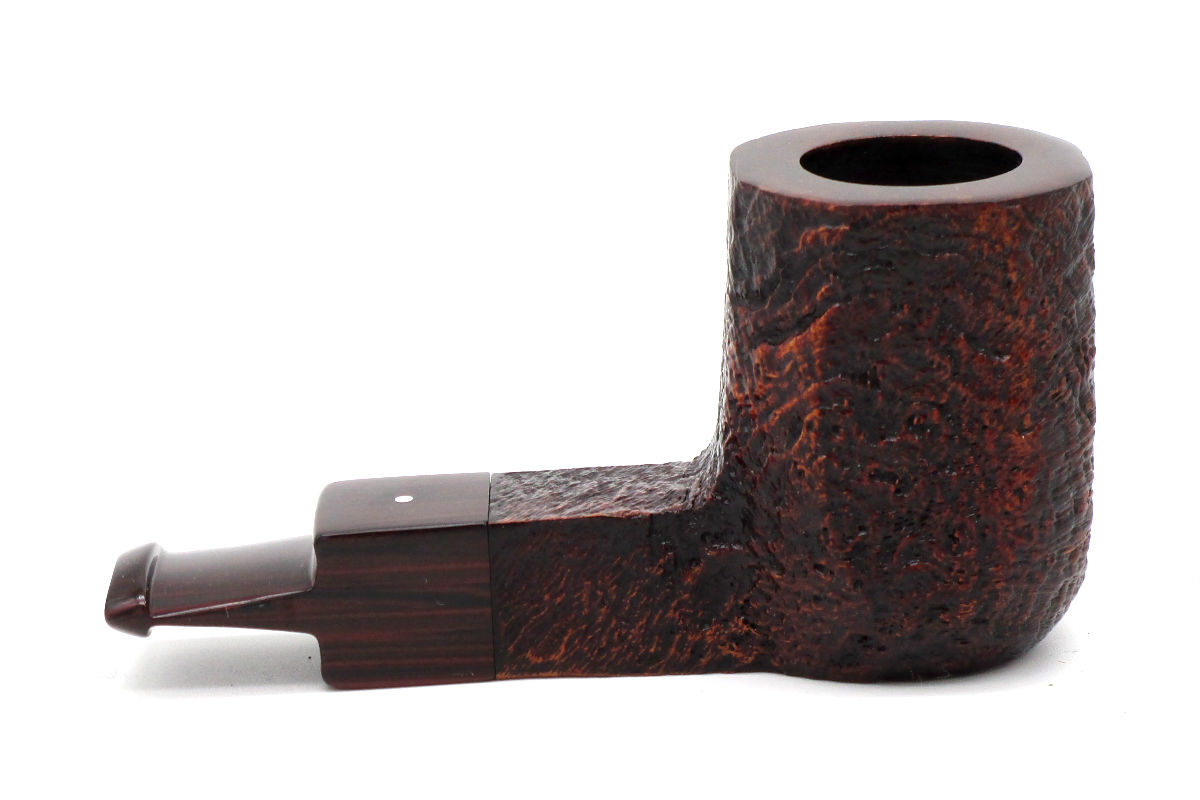 This is one of the questions most often associated with short pipes. The logic seems obvious: shorter stem equals hotter smoke. But the reality is more complicated.
A shorter stem provides less distance for the smoke to cool before it reaches the smoker’s mouth. As a result, the thermal experience can be different from that of a long-stemmed pipe. This does not mean that every Nose Warmer automatically smokes hot. Smoking technique matters enormously.
A short pipe generally rewards a slow, controlled cadence rather than aggressive puffing. The Amsterdam Pipe Museum, for example, notes that extremely short-stemmed pipes are not suited to smoking too quickly because there is less distance available for the smoke to cool. In other words, a Nose Warmer encourages the smoker to slow down.
The advantage that never disappeared: portability
Despite all the changes in materials and styles, one of the greatest strengths of the Nose Warmer remains exactly the same as it was more than a century ago: its size.
It is compact, lightweight, takes up very little space, is easy to carry, and can be comfortably held between the teeth. These qualities make the Nose Warmer particularly attractive to smokers who want a pipe for travelling, walking, outdoor activities or everyday use. The original practical advantage has survived into the modern era.
There is no single Nose Warmer shape
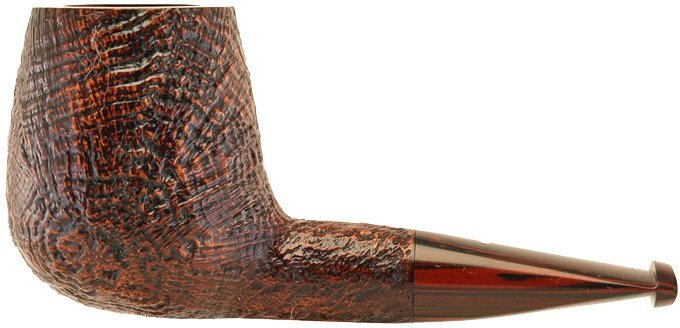 This point deserves special attention. A Nose Warmer does not have one single silhouette. It can be straight or bent, round, angular or organic. It can resemble a Billiard, Apple, Dublin, Poker, Bulldog or many other shapes.
The defining feature is its short overall length. Even Dunhill incorporated the term into its historical shape and nomenclature system, with a specific designation for the Nosewarmer. This is another indication of how deeply the concept became established within the vocabulary of the British pipe industry.
Dunhill and the short pipe
The history of Nose Warmers did not end with clay. British manufacturers continued to produce extremely short pipes in briar. Among the most interesting examples are short-stemmed Dunhill pipes preserved in museum collections.
The Amsterdam Pipe Museum has documented a particularly short Dunhill and notes that such a pipe was especially practical for people who were constantly on the move. The museum even mentions that some Dutch smokers considered this type of pipe suitable for smoking while cycling.
It is a wonderful example of the original philosophy of the Nose Warmer surviving into a completely different era. The worker’s environment had changed; the need for mobility had not.
From working tool to collector’s piece
Something remarkable happened to the Nose Warmer over the course of its history. A form originally associated with practicality and working-class life gradually became something that collectors and pipe enthusiasts appreciated for its character.
Its compact proportions became part of its identity, and its unusual appearance made it memorable. For pipe makers, the small format introduced a new challenge. When a pipe is extremely short, every proportion matters. There is less room to hide mistakes.
The relationship between bowl, shank and stem becomes critical. Balance becomes more important. The transition from bowl to shank has to be carefully considered. Because everything is compressed into a small space, even tiny changes can alter the personality of the entire pipe. A good Nose Warmer may look simple, but it rarely is.
The modern artisan Nose Warmer
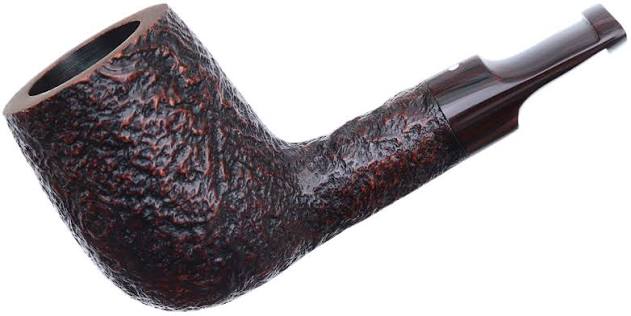 Today, the Nose Warmer has found a particularly interesting place within the world of handmade pipes. Modern artisans can take the original concept and reinterpret it using contemporary techniques, different materials, unusual finishes and new proportions.
The result can be very different from the humble clay pipe of the nineteenth century. Yet the fundamental idea remains: compactness, functionality, and character.
The modern artisan is not simply copying an old pipe; he or she is continuing a design tradition. And that distinction is important. Keeping a tradition alive does not necessarily mean reproducing an object exactly as it was made in the past. It means understanding its history, respecting its essential character and finding a way to give it another life.
Stubbi — A Contemporary Interpretation
At Yusy Pipe Art, the Nose Warmer represents exactly this meeting point between past and present. Stubbi, meaning short and stumpy or stocky, takes inspiration from the compact character of the traditional Nose Warmer.Its name reflects its personality: small, compact, and reassuringly chunky. But beneath that contemporary character is a much older idea.
A pipe originally created around practicality and mobility, now reinterpreted as a handmade object for someone who appreciates craftsmanship, proportion and tradition. This is one of the reasons artisan pipe making is so fascinating. A shape can travel through centuries, its purpose, materials, and owners can change, but something of its original character remains.
From necessity to craftsmanship
Perhaps the most beautiful part of the Nose Warmer’s history is its journey. It began with necessity, became a working man’s pipe, and acquired different names in different regions. It became part of British and Irish smoking culture.
It was broken, shortened, repaired and reused. It survived the transition from clay to briar, became part of the catalogues of established pipe makers, and eventually it became a form appreciated by collectors and independent artisans.
The story of the Nose Warmer is, in many ways, the story of how function can become beauty. Some of the most enduring designs were not created because someone wanted to make something fashionable; they were created because they worked. And when a practical solution works particularly well, time has a way of turning it into a classic.
A small pipe with a long history
Today, it is easy to look at a Nose Warmer and simply see a small pipe. But behind that small silhouette lies a much larger story.
There are the old European clay-pipe industries, the workers who needed both hands free, the Scottish Cuttys, and the Irish Dúidíns. There are the short pipes of industrial Manchester, the broken pipes that were shortened and given another life, and the British manufacturers who continued the tradition.
Finally, there are the collectors who preserve these pieces today and the modern artisans who reinterpret the idea with new materials, new techniques and their own hands.
Why the Nose Warmer still matters
Perhaps that is why the Nose Warmer remains so appealing. It is small, but it is not insignificant. It is simple, but it is not without history. It is compact, but it carries centuries of pipe-making evolution within its proportions.
And when a Nose Warmer is handmade, that history continues. Every artisan adds another small chapter.
Every smoker who chooses one adds another. And every time an old shape is brought back to life by hand, a little of that tradition breathes again.
Keeping a tradition alive does not mean simply repeating what our ancestors did. It means understanding where it came from, respecting its essence and finding a way to let it continue. Perhaps that is what makes the Nose Warmer so special. It is not simply a small pipe; it is a small piece of history.
References and further reading
- George Latimer Apperson, The Social History of Smoking (1914) — An important historical source on smoking culture and the social role of pipes in Britain.
- Albert Barrère, A Dictionary of Slang, Jargon and Cant (1890) — One of the early documented definitions of nose warmer as a very short pipe.
- Oxford Academic — History Research: Research into clay tobacco pipes and their use in Britain.
- Amsterdam Pipe Museum — Historical examples and research concerning short-stemmed pipes and Nose Warmers.
- Science Museum Group — Historical clay Cutty pipes and the Manchester pipe-making industry.
- Galway City Museum — Irish clay pipes and the history of the Dúidín.
- Dictionaries of the Scots Language — Historical definitions of Cutty and Cutty Clay.
- Teanglann / Foclóir Gaeilge–Béarla — Irish terminology relating to the Dúidín.
Picasso and Pipes
The tobacco pipe appears at different moments throughout the long and extraordinary artistic career

Why Is Pipe Smoking Gaining Interest Again?
Tradition, Craftsmanship and a New Look at the World of Pipes
How to Care for and Clean a Handmade Tobacco Pipe
In this guide, you will learn how to clean a tobacco pipe correctly, how to maintain a briar pipe, a


Post a comment: