


Picasso and Pipes
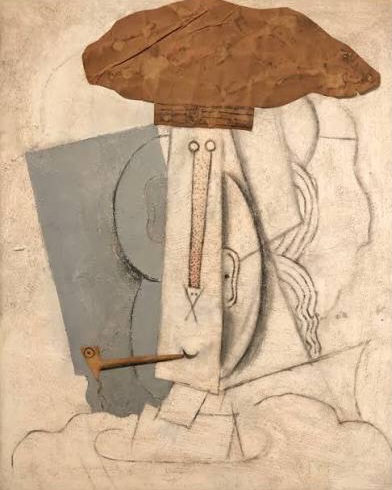
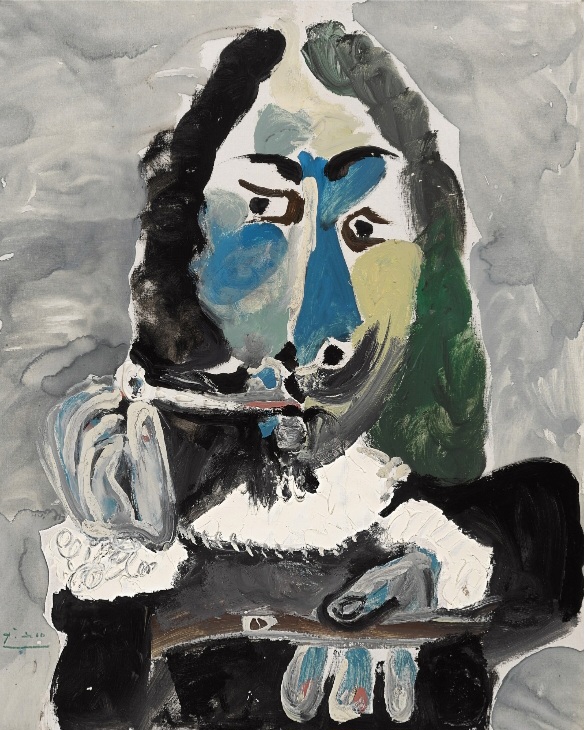
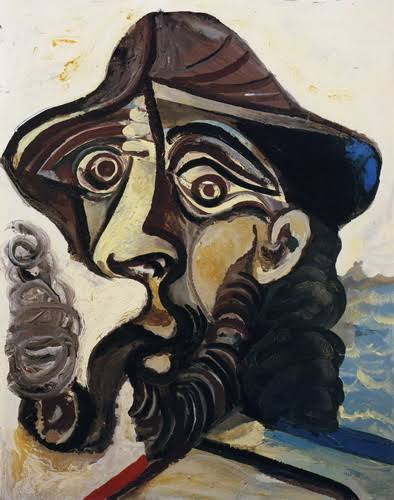
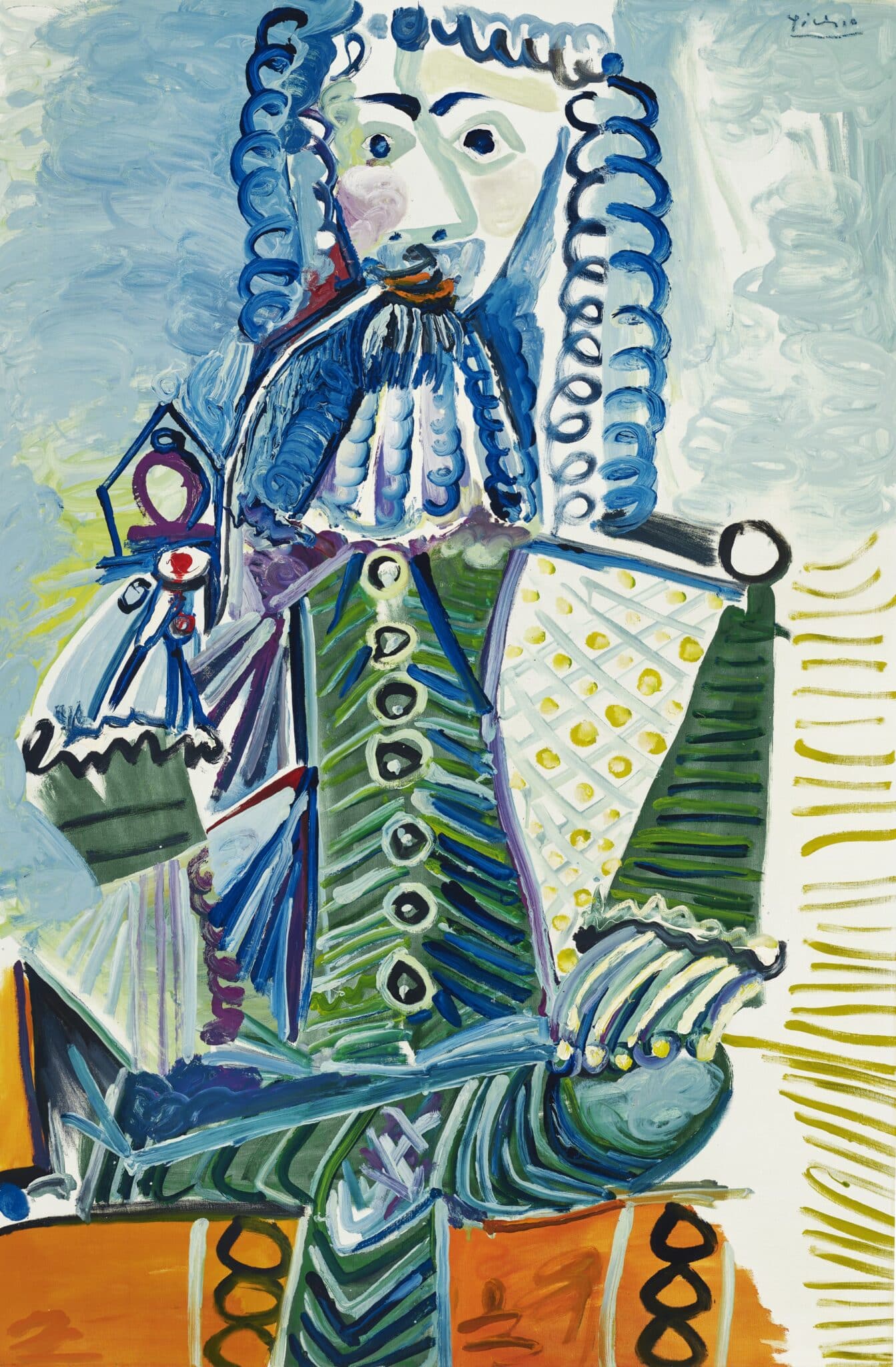
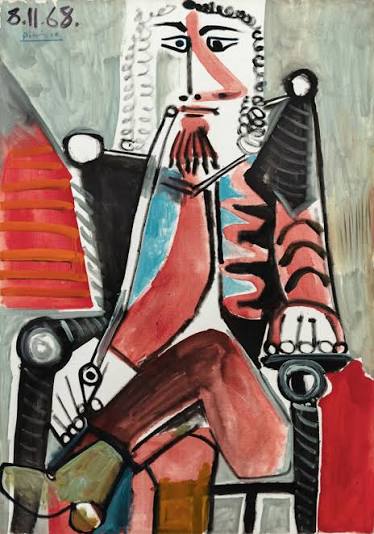
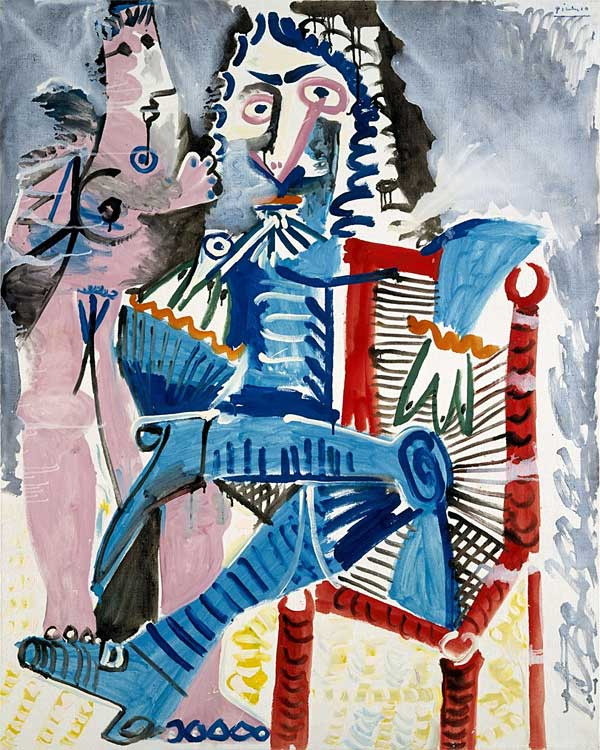
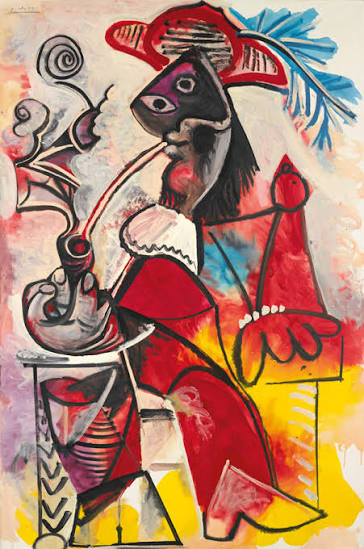
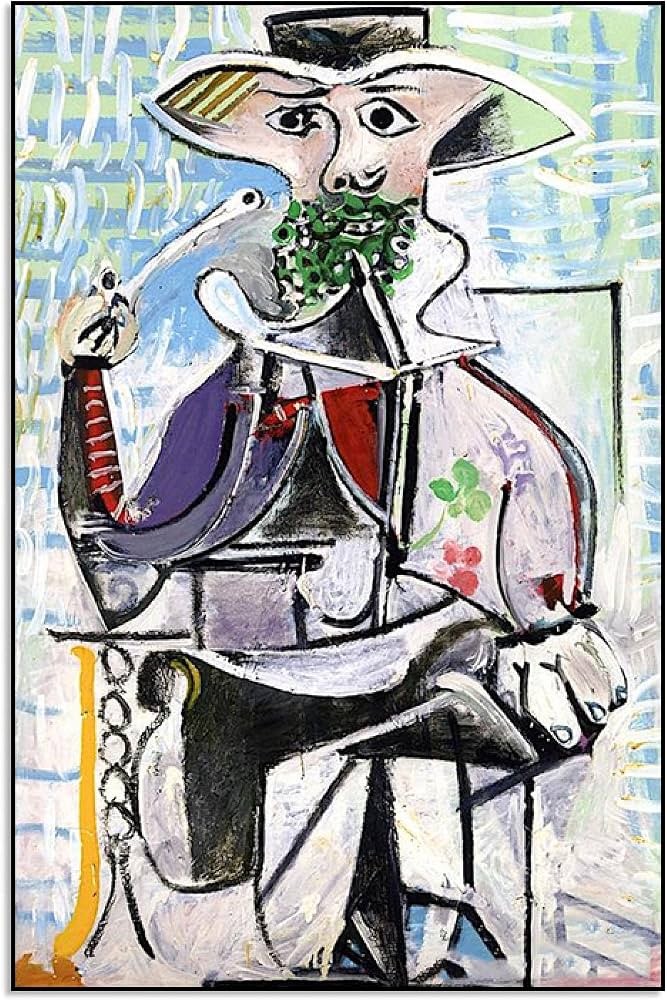
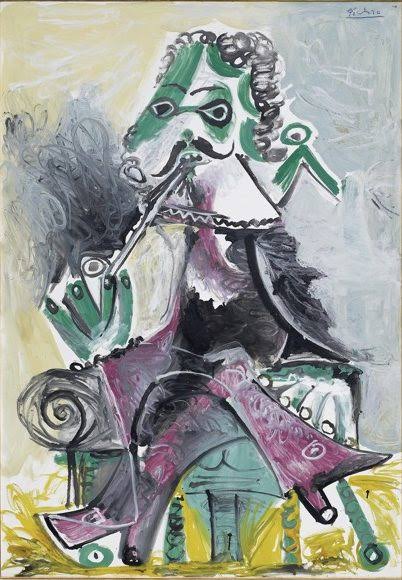
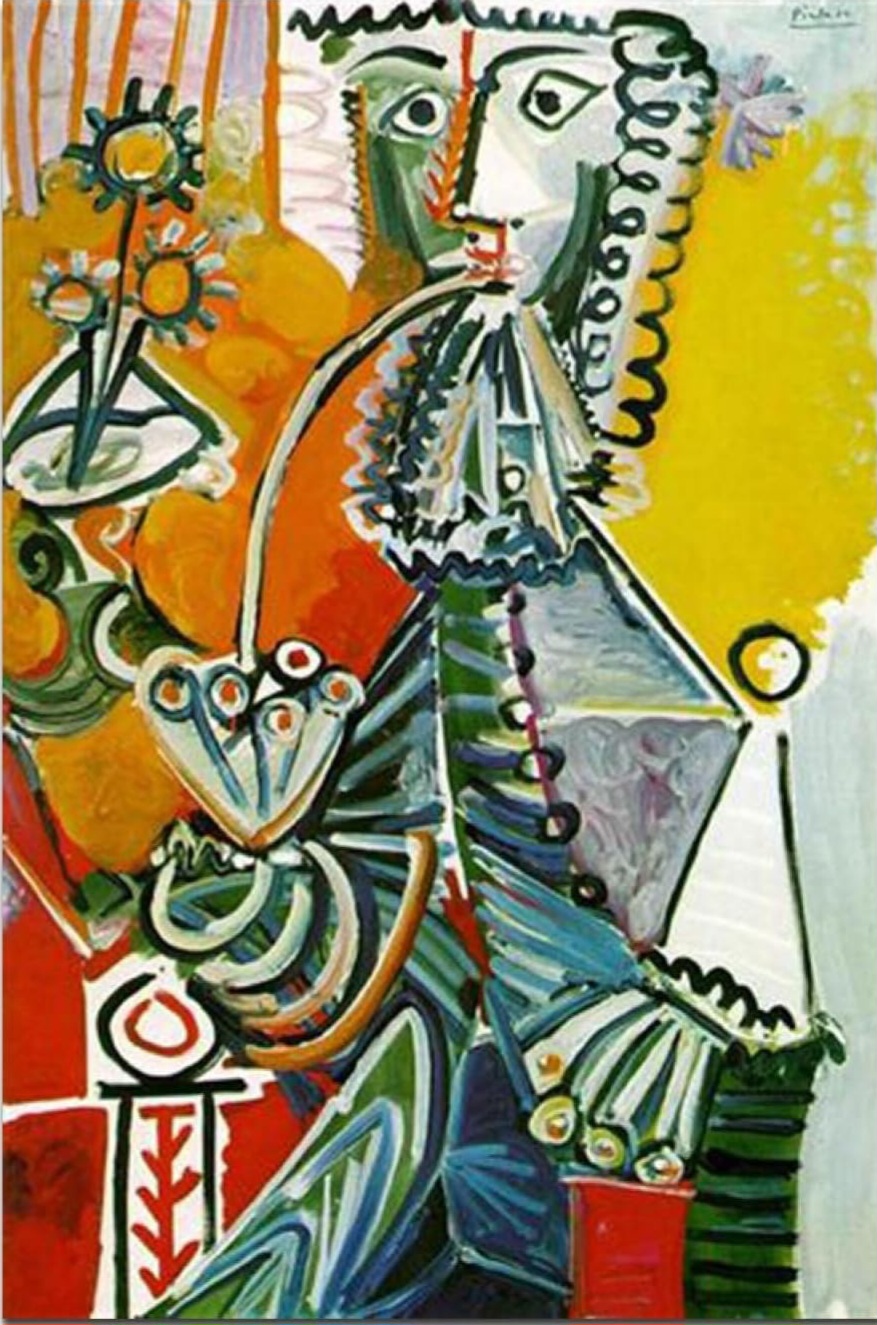
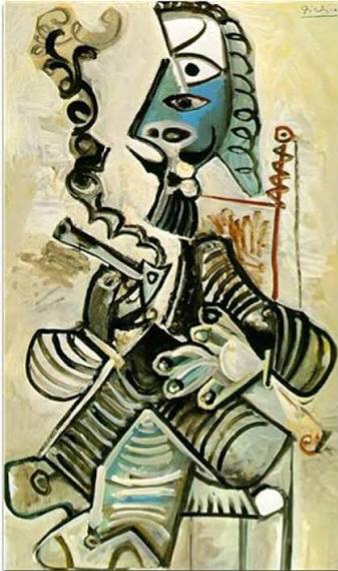
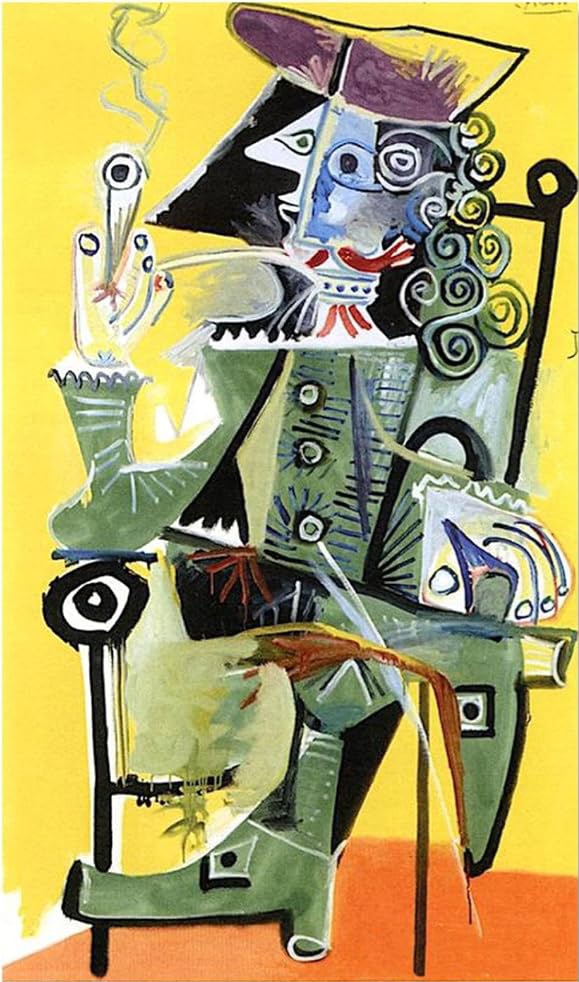
The tobacco pipe appears at different moments throughout the long and extraordinary artistic career of Pablo Picasso. From the Cubist still lifes of the early twentieth century to the famous musketeers with pipes of his later years, Picasso transformed this everyday object into a distinctive element of his artistic universe.
At Yusypipe Art, we explore the relationship between Picasso and pipes through some of his most interesting paintings, collages, prints and, above all, the extraordinary series of musketeers with pipes created during the final years of his life.
Picasso and Pipes: A Motif That Runs Through His Work
The pipe appears in Picasso’s work in many different ways. In his early Cubist still lifes, it can be found on a table alongside a bottle, glass or newspaper. In his collages, it becomes a shape constructed from paper and other materials. In prints, it can be incorporated into compositions dealing with everyday life or symbolism.
In Picasso’s later years, however, the pipe takes on a completely different role: it becomes part of the identity of the musketeer, one of the most important characters in his late artistic production.
This evolution is particularly fascinating because it shows how Picasso could take a simple everyday object and transform it according to the artistic concerns of each period.
Still Life with a Bottle of Rum (1911)
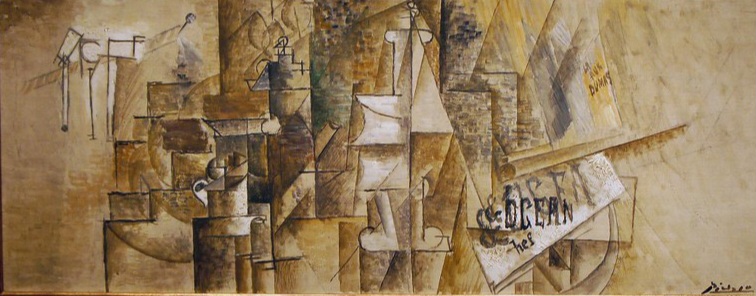
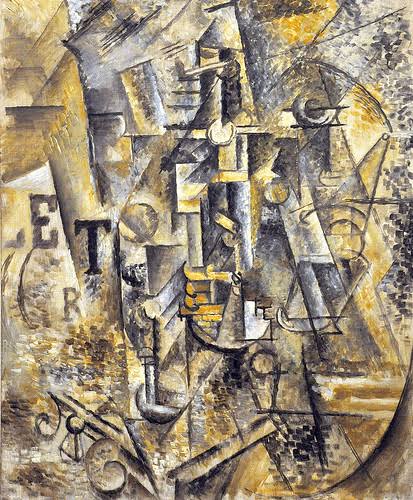
One of the most interesting works for studying the presence of the pipe in Picasso’s art is Still Life with a Bottle of Rum, painted in 1911. The painting belongs to the period of Analytical Cubism and was created in Céret, during the years when Picasso worked closely with Georges Braque.
The composition depicts a round table with a glass, a bottle of rum and a pipe in the foreground, on the right-hand side. The Metropolitan Museum of Art also notes the importance of the letters incorporated into the composition.
The pipe is not represented in a conventional realistic manner. As with the other objects, Picasso fragments and reconstructs reality through planes and geometric forms. The viewer is therefore invited to participate in reconstructing the image.
Pipe Rack and Still Life on a Table (1911)
Another important work is Pipe Rack and Still Life on a Table, also created in 1911. A pipe rack is incorporated into the still life.
The work was conceived as part of a series of panels intended to decorate the library of Hamilton Easter Field’s mansion in Brooklyn. The Metropolitan Museum identifies the pipe rack in the upper-left area of the composition.
The context is particularly interesting. Picasso was not simply placing an object randomly. A library, a table, literary references and a pipe rack create an atmosphere associated with reading, culture and everyday life. The pipe becomes part of a larger visual environment.
Pipe, Glass, Bottle of Rum (1914)
In 1914, Picasso brought together several objects associated with everyday life in Pipe, Glass, Bottle of Rum. This work, held in the collection of The Museum of Modern Art in New York, is a collage made using colored paper, printed and painted paper, pencil and gouache on prepared board.
Its importance also lies in the technique. Picasso no longer needed to paint a bottle, glass or pipe literally. He could use fragments of paper and materials taken from the real world to construct a new image. The pipe therefore becomes a shape within the language of collage.
Picasso and Graphic Art Related to Pipes
Picasso’s relationship with pipes can also be explored through his graphic work. An especially interesting example is The Pipes (Les Pipeaux), from 1946, held by MoMA. The work was created using etching and drypoint, two important techniques within Picasso’s graphic production.
This print demonstrates that Picasso’s interest in pipes and pipe-related subjects was not limited to Cubism or to his later years. His prints provide another way of following the development of his ideas between painting, drawing, collage and printmaking.
The Birth of Picasso’s Musketeer
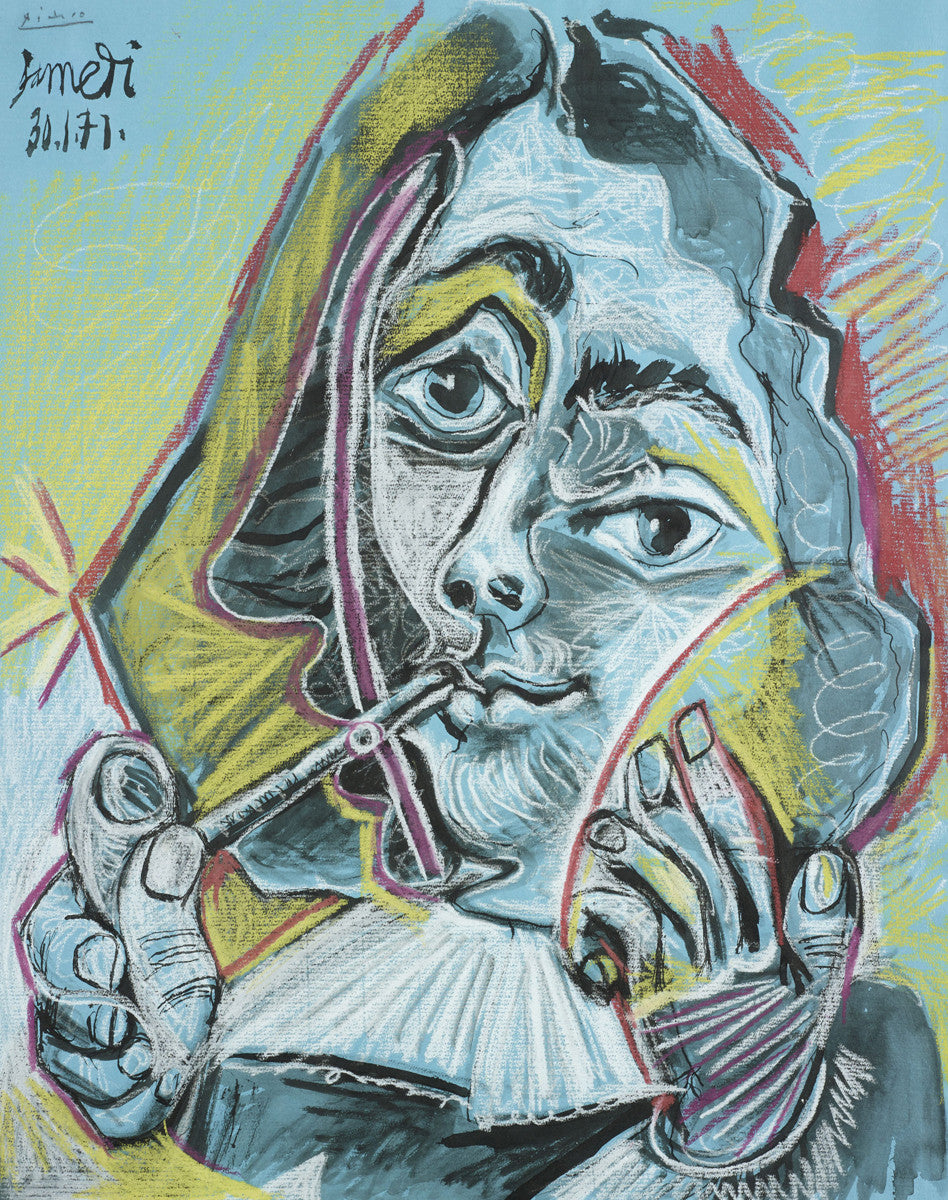
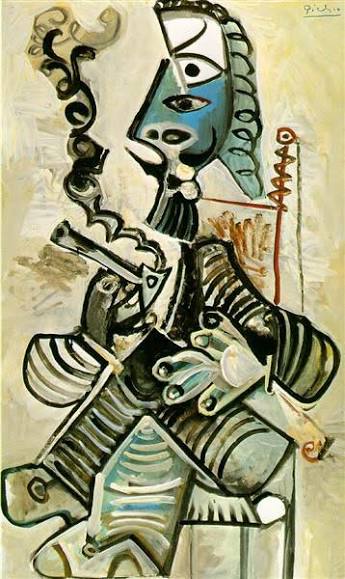
But if there is one period in which the pipe becomes particularly striking, it is the period of Picasso’s musketeers. The musketeer began appearing in Picasso’s work during the second half of the 1960s. From there, the character gradually entered his repertoire of drawings, works on paper and paintings.
The musketeer could appear as a soldier, gentleman, painter, theatrical character or caricature. And one of his most recognizable attributes was the pipe.
Picasso’s Musketeers with Pipes
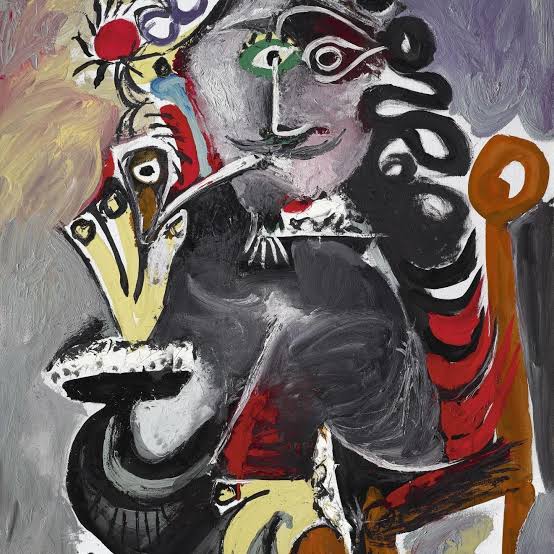
During 1968, Picasso created an extraordinary series of large paintings devoted to musketeers. In many of them, the character appears smoking a pipe, dressed in clothing inspired by seventeenth- and eighteenth-century gentlemen.
Sotheby’s has described the musketeer as one of the major subjects of Picasso’s late production and has discussed the character as a kind of psychological avatar, allowing Picasso to project different aspects of his own identity. The result is a unique combination of history, imagination, humor and autobiography.
Picasso was not trying to reconstruct a historically accurate musketeer. He reinvented him.
Mousquetaire à la pipe (October 17, 1968)
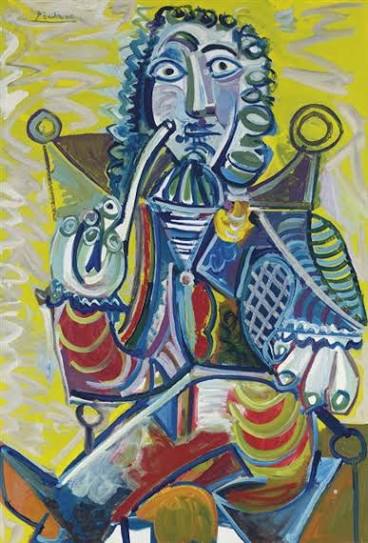
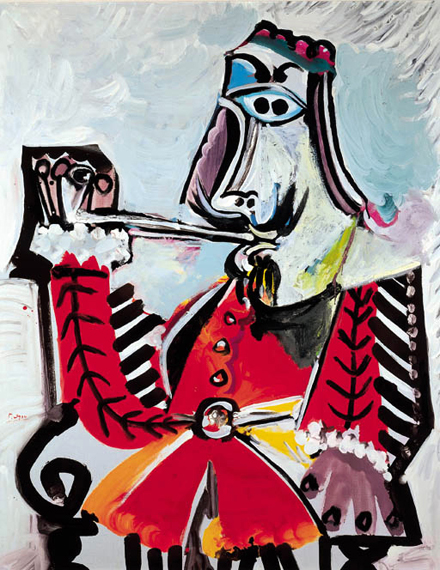
One of the best-documented works is Mousquetaire à la pipe, painted on October 17, 1968. Christie’s records the work as an oil on canvas, signed and dated by Picasso. It belongs to a series of large musketeer portraits produced during this period, many of which show the character smoking a pipe.
The painting is notable for its intense colors and the extraordinary expressiveness of the figure. The musketeer seems almost to emerge from the canvas. The hat, beard, clothing and pipe become essential elements in constructing his personality.
Mousquetaire à la pipe II (November 5, 1968)
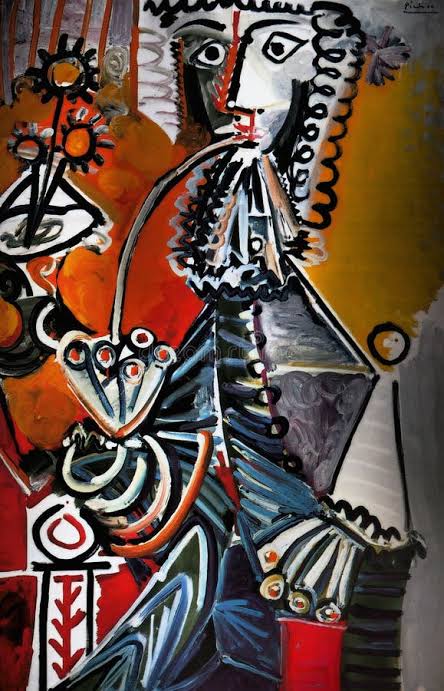
Another remarkable example is Mousquetaire à la pipe II, dated November 5, 1968. Christie’s records that Picasso painted two musketeers with pipes on that day, sharing certain physical characteristics such as curly hair and beard.
In this work, the character is shown smoking a clay pipe with an exaggeratedly long stem. The effect is almost humorous. The gentleman, who might traditionally represent strength and authority, becomes in Picasso’s hands a theatrical and somewhat caricatured figure.
The Pipe as an Attribute of the Character
In Picasso’s musketeers, the pipe has a much greater role than that of a simple accessory. It helps define the character. The hat, hair, beard, sword, clothing and pipe form a visual language that allows us to recognize the musketeer immediately.
The pipe also contributes to his relaxed attitude. The character may appear powerful and proud, yet he is calmly smoking as though posing for a portrait. This contrast between solemnity and humor is one of the most attractive features of the series.
Picasso, Rembrandt and Velázquez
Picasso’s interest in musketeers was also connected with his ongoing dialogue with the history of European art. Sotheby’s has highlighted the relationship between these characters and the tradition of the Old Masters, particularly Rembrandt and Velázquez.
Picasso could use the appearance of a historical character to place himself symbolically within the tradition of great European painters. The musketeers feature elements reminiscent of traditional portraits: large hats, elaborate clothing, capes, collars, beards and theatrical poses.
But Picasso transforms all of these elements through his own energetic brushwork. The result is simultaneously old and modern.
Aquí tienes la continuación del texto con el mismo formato limpio, sin símbolos, con títulos unificados y una estructura de párrafos optimizada para una lectura más fluida.
Buste d’homme à la pipe (1969)
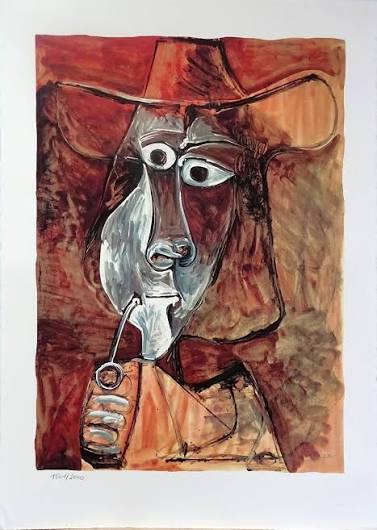
The subject continued into 1969. An especially interesting work is Buste d’homme à la pipe, dated February 27, 1969.
Sotheby’s records the work as an oil on corrugated cardboard mounted on panel and relates it directly to Picasso’s musketeer series. The pipe once again becomes one of the defining elements of the male figure.
Homme à la pipe (1969)
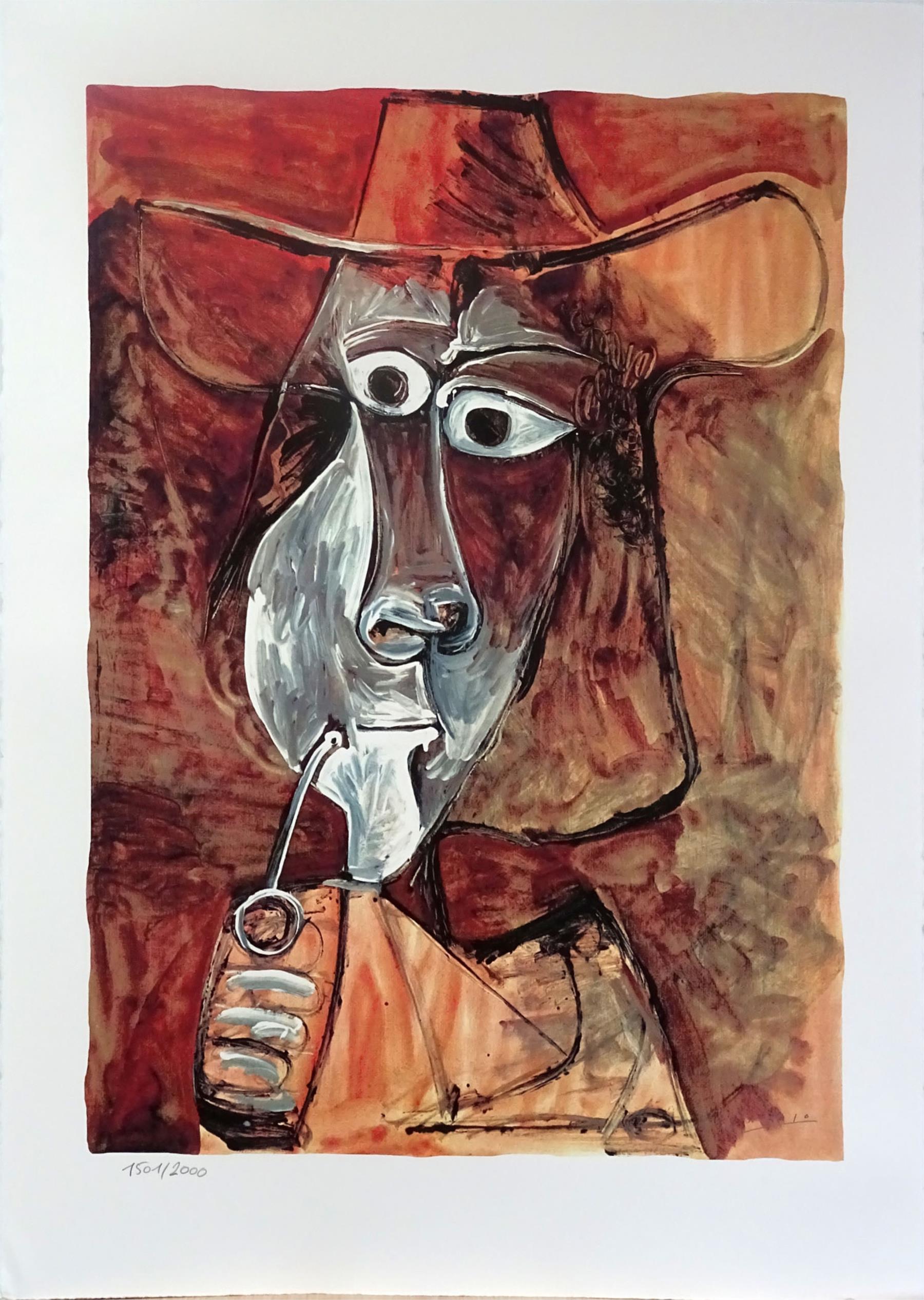
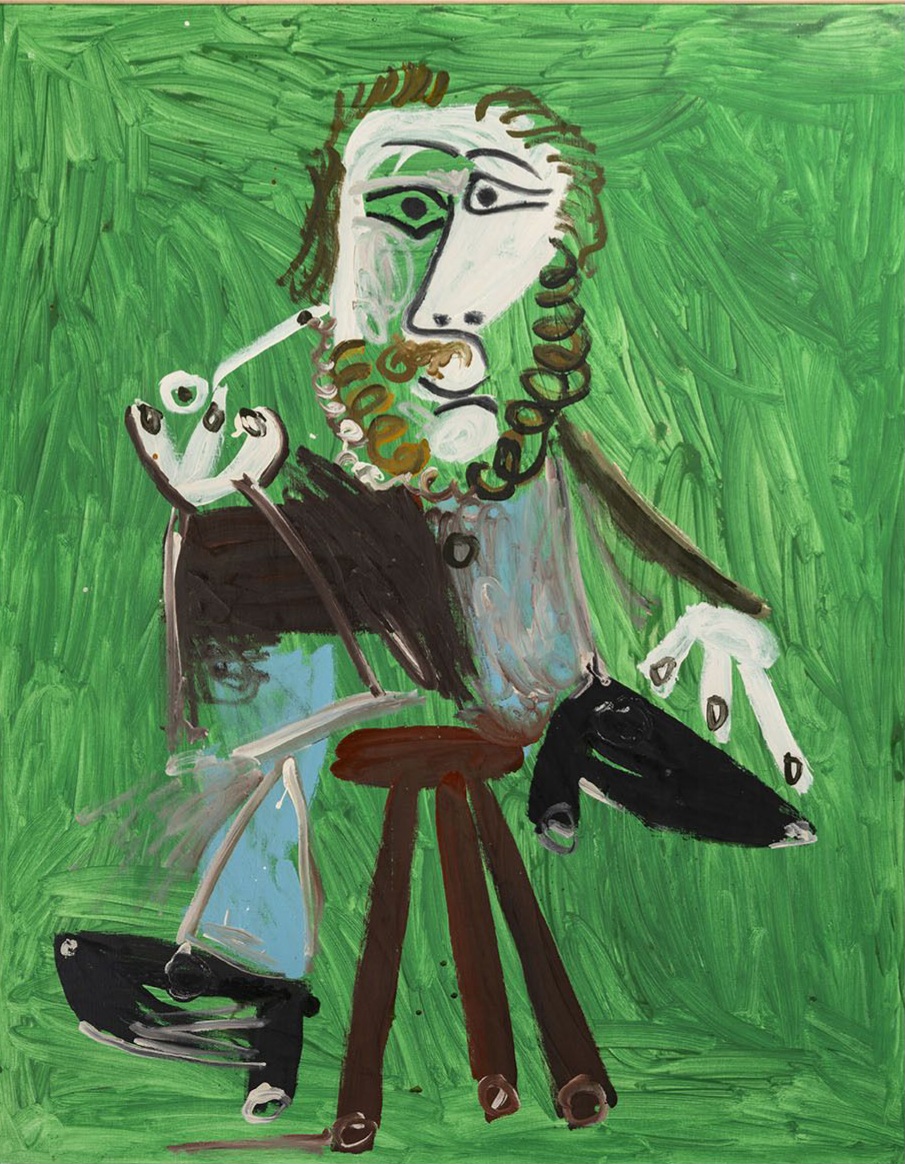
Another documented work is Homme à la pipe, dated May 8, 1969. This large oil painting belongs to Picasso’s 1969 production and continues his exploration of male figures, masks and invented identities.
The man with the pipe does not necessarily represent a specific individual. He is a character, a mask, a creation of Picasso.
Personnage à la pipe (1971)
The subject continued almost until the end of Picasso’s artistic life. Personnage à la pipe, dated November 16, 1971, is one of the later paintings connected with the musketeer theme.
Sotheby’s places the work among Picasso’s late paintings featuring this character, which had become one of the most recognizable motifs of his final period. The musketeer was not simply a passing theme; it accompanied Picasso through his later years.
From the Cubist Pipe to the Musketeer
If we look chronologically at Picasso’s works involving pipes, we can see a fascinating evolution:
- 1911: the pipe appears as an everyday object in a Cubist still life.
- 1914: the pipe becomes part of a collage alongside a glass and bottle.
- 1946: Picasso explores the subject of pipes through graphic art.
- 1968: the pipe becomes one of the defining attributes of the musketeer.
- 1969–1971: the man or musketeer with a pipe continues to appear in numerous paintings from Picasso’s late period.
The same visual idea therefore runs through several decades of artistic production, while its meaning changes completely.
Important Picasso Paintings and Prints Featuring Pipes
For anyone searching for Picasso paintings with pipes, the following works are particularly interesting:
- Still Life with a Bottle of Rum, 1911.
- Pipe Rack and Still Life on a Table, 1911.
- Pipe, Glass, Bottle of Rum, 1914.
- Mousquetaire à la pipe, October 17, 1968.
- Mousquetaire à la pipe II, November 5, 1968.
- Buste d’homme à la pipe, February 27, 1969.
- Homme à la pipe, May 8, 1969.
- Personnage à la pipe, November 16, 1971.
Among his graphic works:
- The Pipes (Les Pipeaux), 1946, etching and drypoint.
- Still Life with Bottle of Marc, 1911, drypoint, an important Cubist print documented by The Metropolitan Museum of Art.
Picasso’s Musketeers with Pipes and Yusypipe Art
The images of Picasso’s musketeers are particularly fascinating because they allow us to observe the characteristics of his late style: intense colors, expressive faces, large hats, beards, elaborate clothing and, in many cases, a clearly visible pipe.
However, when studying Picasso’s work, it is important to distinguish between a visual identification and the official title of a particular work. There are numerous versions and variations of the musketeer created during 1967, 1968, 1969, 1970 and 1971.
For that reason, the exact title, date and provenance should always be checked against the relevant museum, catalogue or auction record. This is particularly important for collectors and art enthusiasts researching a specific painting.
What Does the Pipe Represent in Picasso’s Musketeers?
There is no single interpretation that applies to every painting. The pipe can be understood as an attribute of the gentleman and as an element that gives the character a relaxed, theatrical quality. But it can also form part of the construction of a character that has been interpreted as a projection of Picasso himself.
The musketeer combines Picasso’s interest in the Old Masters, historical characters, literature, portraiture and his own identity as an artist. That makes the pipe especially interesting. It is a small everyday object that helps construct a much larger character.
Picasso and Pipes: An Artistic Journey
From the Cubist tables of 1911 to the musketeers of 1968–1971, the pipe appears at different moments throughout Picasso’s career. At first, it was an everyday object. Then it became a shape within collage. Later, it appeared in graphic art. Finally, it became an attribute of one of the most recognizable characters of Picasso’s late period.
The musketeers with pipes therefore represent much more than a collection of portraits of gentlemen. They are a synthesis of Picasso’s interest in art history, literature, identity and creative freedom. In these paintings, Picasso appears to play with the past while continuing to paint with complete freedom.
Perhaps that is the best way to understand his late work: an artist who, after decades of artistic experimentation, was still searching for new characters, new forms and new ways of seeing.
Conclusion
The relationship between Pablo Picasso and pipes runs through several different periods of his artistic career. In Cubism, pipes appear in still lifes. In collages, they are constructed from fragments of paper. In graphic art, they become part of different compositions.
But in Picasso’s later years, the pipe takes on an especially distinctive role. The musketeers with pipes become colorful, humorous, theatrical and powerful characters. Works such as Mousquetaire à la pipe, Buste d’homme à la pipe, Homme à la pipe and Personnage à la pipe demonstrate the extraordinary freedom with which Picasso continued to work during his final years.
For lovers of both art and pipes, this part of Picasso’s production offers a fascinating perspective: discovering how an everyday object can become, in the hands of a great artist, one of the defining characteristics of an entire character.


Post a comment: